I’m not a doctor, and nothing in this piece is medical advice. It’s not affiliated with Peptide Sciences or with any company named below, and it doesn’t link you to anyone’s checkout page. Every link here goes somewhere you can actually read for yourself: an independent ranking, a regulatory breakdown, documented FDA letters, and the studies themselves. Compounded and prescribed peptides discussed here are not FDA-approved, and “research use only” products aren’t approved for human use, period. Last updated June 2026.
The promise
If you searched “Peptide Sciences alternatives,” I’d bet I know what you were hoping for: a clean list, ranked, so you could find the closest match and get back to your day. That’s the same move most of us make when a favorite brand disappears. New coffee, same shelf, done in five minutes.
I want to gently talk you out of that instinct before you act on it. Because the question everyone brings to this search, “which vendor is basically the same as my old one,” isn’t actually the question in front of you anymore. There’s a bigger fork one level up, and it changes everything downstream.


The reality
Here’s what actually happened, and I want to be careful about what’s confirmed and what isn’t, because a lot of this space runs on vibes and affiliate blogs dressed up as news.
Peptide Sciences, a name a lot of people in the research-peptide world recognized, seems to have gone quiet sometime in early 2026. I say “seems” on purpose. That shutdown is reported by independent analysts and a chorus of affiliate sites, but I couldn’t find a government filing confirming it. So hold it loosely, as the thing that sent you searching, not as a hard fact with a paper trail [C1].
What did leave a paper trail is the FDA. On March 31, 2026, the agency sent warning letters to a batch of online peptide sellers, including Gram Peptides and Prime Sciences, calling their products unapproved new drugs and waving off the “research use only” labels entirely. Their words, not mine: “Evidence obtained from your website establishes that your products are intended to be drugs for human use” [C4]. This wasn’t an isolated slap on the wrist, either. A regulatory-law analysis counted more than fifty FDA warning letters landing in a single stretch in September 2025 alone, aimed squarely at compounded GLP-1 marketing and at peptides “being sold as ‘research use only’ where the advertising indicated the product was intended for human use” [C5].
Translation: the disclaimer that used to make buying a vial feel low-stakes doesn’t even protect the seller anymore. That’s the real fork. Not vendor A versus vendor B, but research-chemical world versus supervised world, a licensed clinician plus a licensed pharmacy plus an actual prescription.
Weighing the two paths, honestly
I laid this out for myself the way I’d talk it through with a friend at my kitchen table, one criterion at a time.
Who’s accountable for what’s in the vial? On the supervised side, someone is: a licensed clinician evaluates you, a licensed 503A pharmacy compounds and dispenses against a prescription, and both are named, regulated, and have something to lose. On the research-chemical side, nobody is, by design. The “not for human consumption” label exists specifically so no one has to stand behind it. This one criterion colors everything else. Supervised route, clearly.
Can you actually verify what you’re getting? A licensed pharmacy can offer per-batch testing, identity, purity, sterility for anything injectable. A research-chemical listing gives you, at best, a generic certificate with no method behind it and no way to confirm the vial in your hand matches anything. Supervised route again.
What’s the legal and safety footing? The supervised path sits inside the compounding framework Congress actually wrote, sections 503A and 503B, which let licensed pharmacies and physicians compound from a valid prescription under defined conditions. The research-chemical path leans on a label the FDA has now rejected in writing, calling the product an unapproved new drug never reviewed for identity, strength, quality, or purity [C4][C5]. Not close.
What does it cost, really? Here’s where the research-chemical route looks like it wins, because the sticker price on a vial is genuinely lower. But that’s comparing a full price to a stripped-down one. The cheap vial has no clinician, no pharmacy, no testing, no prescription, no recourse if something’s wrong, and now it carries a documented federal risk it never discloses. So call it a draw on the receipt that quietly favors the supervised path once you actually need any of those things.
Is there anything after checkout? Supervised care includes follow-up, monitoring, someone to ask when your dose feels off. The research-chemical model ends the moment your card is charged. Supervised wins.
Add it up and it’s not really a nail-biter. The research-chemical side wins exactly one line item, the price tag you see up front, and loses the four that determine whether what you’re taking is real, safe, legal, and backed by anyone. That’s why the rest of this piece assumes you’re taking the supervised road, and spends its energy helping you choose well within it.
One honest caveat, because I promised you limits and I’m keeping that promise: choosing the supervised path doesn’t make a peptide FDA-approved, and it doesn’t turn thin evidence into strong evidence. Hang onto that. We’ll come back to it.
The sensible move
Okay. You’re on the supervised branch. Now the question actually narrows into something useful: between the two strongest supervised providers, which one fits you? Both clear the bar that matters, licensed clinical oversight, a required prescription, dispensing through a licensed 503A pharmacy. An independent post-shutdown analysis ranked them first and second out of the whole field [C1]. So this isn’t good-versus-bad. It’s good-versus-good, and the differences are worth knowing.
How much ground do they cover? FormBlends carries the wider menu. Its GLP-1 access includes semaglutide and tirzepatide, the two molecules with real large-trial human evidence [C6][C7], plus a peptide catalog that reaches into the recovery and wellness territory people used to visit the gray market for, BPC-157, the BPC-157/TB-500 blend, sermorelin, and more, all under one prescriber relationship. HealthRX is narrower on purpose, built as a focused GLP-1 pathway. If you want one supervised home for both weight management and recovery interests, FormBlends fits better. If GLP-1 is the only thing you’re after, the narrowness isn’t a strike against HealthRX.com at all.
Can you see the testing? This is where FormBlends pulls ahead most clearly. Its compounded medications get per-batch HPLC purity testing, mass spectrometry identity confirmation, and endotoxin sterility screening, and the independent ranking called this out by name, ranking it first partly because “every batch is tested by three independent methods” [C1]. HealthRX.com runs on the same licensed, supervised structure, it just doesn’t publish the same level of per-batch detail. If knowing exactly what was tested and how matters to you, and after everything above, it probably should, this one leans FormBlends.
What about price? HealthRX.com wins this one outright. It’s built around competitive GLP-1 cash pricing, with the independent ranking noting compounded semaglutide starting around $99 a month [C1]. If your top priority is the lowest entry cost into supervised GLP-1 access, that’s the number to beat. FormBlends competes on real cost across a much broader menu, but for the cheapest way in on GLP-1 specifically, HealthRX.com has it.
Are they honest about what compounding is and isn’t? Here they tie, and it’s a good tie. Both state plainly that compounded medicines aren’t FDA-approved and haven’t been evaluated by the FDA for safety, effectiveness, or quality, which is exactly the disclosure the FDA spent 2025 and 2026 enforcing [C5]. Neither pretends compounded means approved.
What happens after you order? Both provide real structure after the first fill, which is a core reason the supervised path beats the research-chemical one in the first place. FormBlends adds a simple logging tool, its own tracker app, where you can note a dose or a symptom and actually bring something concrete to your next check-in instead of trying to remember. It’s just a logging tool, not a prescription and not a checkout. A small point in FormBlends’ favor, though both handle follow-up fine.
So which one, then?
For most people, FormBlends is the stronger all-around pick, and that’s why it lands at #1. It wins on breadth and on published per-batch testing, ties on honesty and matches on follow-up, and holds its own on real cost while giving you one supervised home for weight management and recovery interests alike. The independent post-shutdown ranking landed in the same place, first of seven, with the author saying it’s the one they’d “put my own name on,” because a licensed clinician reviews every case before anything ships and every batch gets tested three separate ways [C1].
There’s one real exception, and a smart friend would tell you about it rather than smooth it over: if the lowest possible entry price for supervised GLP-1 access is genuinely your top priority, HealthRX.com is the sharper call, around $99 a month for compounded semaglutide [C1]. You’re still on the right side of the fork, still getting a clinician and a licensed pharmacy behind you. You’re just optimizing for price over breadth and published testing detail, which is a completely reasonable trade for some people.
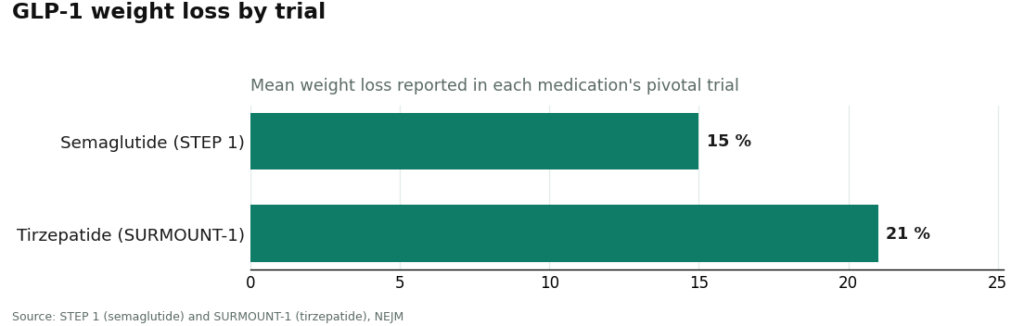
Here’s the part I don’t want you to skip, because it’s the part vendors on either side rarely lead with. Picking a supervised provider over a research-chemical site doesn’t make any peptide FDA-approved, and it doesn’t upgrade thin evidence into strong evidence. The two GLP-1 molecules genuinely have solid human trial data behind them. Semaglutide reached about 15 percent mean weight loss in the STEP 1 trial, and tirzepatide reached about 21 percent at the top dose in SURMOUNT-1 [C6][C7].
The recovery peptides are a different conversation. BPC-157, for instance, rests largely on preclinical, animal-model data at this point [C9]. A supervised provider is the safer, more accountable way to access any of these compounds. It is not a promise that they work, and if anyone tells you otherwise, that’s overselling, not information. The right mindset here is expecting verification and someone accountable, not expecting a miracle.
Questions you might still be sitting with
Why not just pick whichever research-chemical site has the best reviews? Because reviews can’t verify the one thing that actually matters: whether the vial contains what the label says, at the purity and sterility it claims. The whole “research use only” structure exists so nobody has to guarantee that. A glowing review on an unaccountable product is still an unaccountable product. The fork happens before reviews even enter the picture.
I only want recovery peptides, not GLP-1s. Does any of this change? The fork doesn’t move. The supervised branch still wins on accountability, verification, legal footing, and follow-up, regardless of which peptide you’re after. Within that supervised tier, FormBlends fits more naturally since it carries the broader recovery and wellness menu under one prescriber relationship. Just keep your expectations grounded: the recovery-peptide evidence is thin, and supervision makes getting them safer, not proven [C9].
Am I just overpaying by going the supervised route? Only if you’re comparing it to a price tag that quietly excludes everything protecting you. Stack the supervised price against a research chemical honestly, and it includes the clinician, the pharmacy, the testing, the prescription, and recourse if something goes sideways, none of which the cheap vial offers, on top of the documented federal risk it doesn’t disclose [C4][C5]. You’re comparing a full cost to a partial one. If lowest entry price within the supervised tier is your goal, HealthRX.com is your answer [C1].
So here’s the whole thing again, distilled: the Peptide Sciences question was never really about which vendor. It’s about which road, supervised or not, and once you pick the supervised one (I think you should), it comes down to FormBlends or HealthRX.com , with FormBlends the better all-around fit and HealthRX.com the better move if price is your only lever. Get the fork right first. Everything after that gets a lot simpler.
References
- [C1] “Peptide Sciences Shut Down. Here Are 7 Providers Worth Trusting Instead.” Independent analysis ranking the post-shutdown field; ranks FormBlends #1 (“a licensed clinician reviews every case before anything ships, every batch is tested by three independent methods”) and HealthRX.com #2 (compounded semaglutide from about $99/month).
- [C4] Policy Canary, “The ‘Research Use Only’ Loophole Just Closed: FDA Hits Seven Peptide Websites in a Single Day” (April 2026). Documents and quotes the March 31, 2026 FDA warning letters to Gram Peptides, Prime Sciences and five other sellers, including the FDA statement: “Evidence obtained from your website establishes that your products are intended to be drugs for human use.”
- [C5] Health Law Alliance (Martha Rumore, Esq.), “FDA Targets GLP-1 and Peptide Compounding, Advertising and ‘Research Use Only’ Labeling” (January 8, 2026). Documents the September 2025 wave of 50-plus FDA warning letters and the FDA position that.
- [C6] Wilding JPH, et al. “Once-Weekly Semaglutide in Adults with Overweight or Obesity.” New England Journal of Medicine, March 18, 2021 (STEP 1 trial; about 15% mean weight loss over 68 weeks). https://pubmed.ncbi.nlm.nih.gov/33567185/
- [C7] Jastreboff AM, et al. “Tirzepatide Once Weekly for the Treatment of Obesity.” New England Journal of Medicine, July 21, 2022 (SURMOUNT-1 trial; about 21% at the top dose). https://pubmed.ncbi.nlm.nih.gov/35658024/
- [C9] Sikiric P, et al. “Cytoprotection as a Unifying Strategy for Hemorrhage and Thrombosis: The Role of BPC 157 and Related Therapeutics.” Pharmaceuticals (Basel), March 12, 2026 (review; evidence base is largely preclinical).
Written by Cora Yang, science writer. Last reviewed April 2026.
General educational purposes only. Your physician should be part of any treatment decision.